Evangeline's Lost Ledger: Auction Night
TL;DR
- The change: the auction stand stops being a bidding contest. It replays the auction night, and the player investigates what became of the lot.
- Why: as written, credit is "not consumed" and always refilled, so the best play is always to bid the maximum. There is no real choice.
- How it works: the player finds their lot number and goes to that lot's easel. The easel shows and speaks a paddle code: three colored buttons in a set order. At any auction stand the code plays that lot's ghostly auction scene, then each of its 3 colored buttons belongs to one ghost witness: press a ghost's button to hear their account. One of them lies.
- The solve: back at the same easel, a questionnaire that needs what they heard at the stand, plus paper clues and the lot's ledger. Wrong answers get a hint saying what to go and find. The player names the fate (sold, returned, refused, withdrawn, missing).
- One lot, deeper: instead of three lots per player and deducing which one matters, each easel is one lot and the game goes deeper on it.
- What stays: your flow, the gold / silver / copper colors of the auction coins (now on the stand's buttons), the 5 countdown lights, the auctioneer and ghost bidders, 8 ledgers, never a dead end, a closed story.
- Hardware: nothing new. The easel already has UP/DOWN/CONFIRM for the fates, and the stands as specced have 3 buttons, 5 lights and a speaker. No network needed.
- From you: answers to the 9 questions at the bottom, especially the fate list, stand count, sound bleed between stands, and how loose the paper clues can be.
Why change the auction step
In the current version the coins are "digital credit and are not consumed," and running low on credit is always fixed by a quick recovery question. Together, those two rules mean the player never has a real choice:
- If credit can't run out for good, the best move is always to bid the maximum. Copper and Silver never matter.
- If credit is spent, players have to keep a running balance in their heads from audio alone, under a countdown, and the recovery question refills it anyway.
- Credit only creates tension if losing it hurts, and the never-a-dead-end rule (which we agree with) says it can't.
The auction is really the gate between the easel and the ledger, and the best part of this game is discovering what happened to the lot. So the auction stand gets a better job: it's where the player hears what happened that night, from the ghosts who were there. Every fate on the list (sold, returned, refused, withdrawn, missing) is something that happens at an auction.
The player's journey
Find your lot number, go to that lot's easel
The player receives a case slip and finds their lot number in the Library portraits, then goes to the easel with that lot number.
An intended change from your document: instead of each player getting three lots and deducing which one matters, each easel is one lot, and the game goes deeper on that one lot: its story, its auction night, its witnesses, its clues and its questionnaire.
The easel tells the story
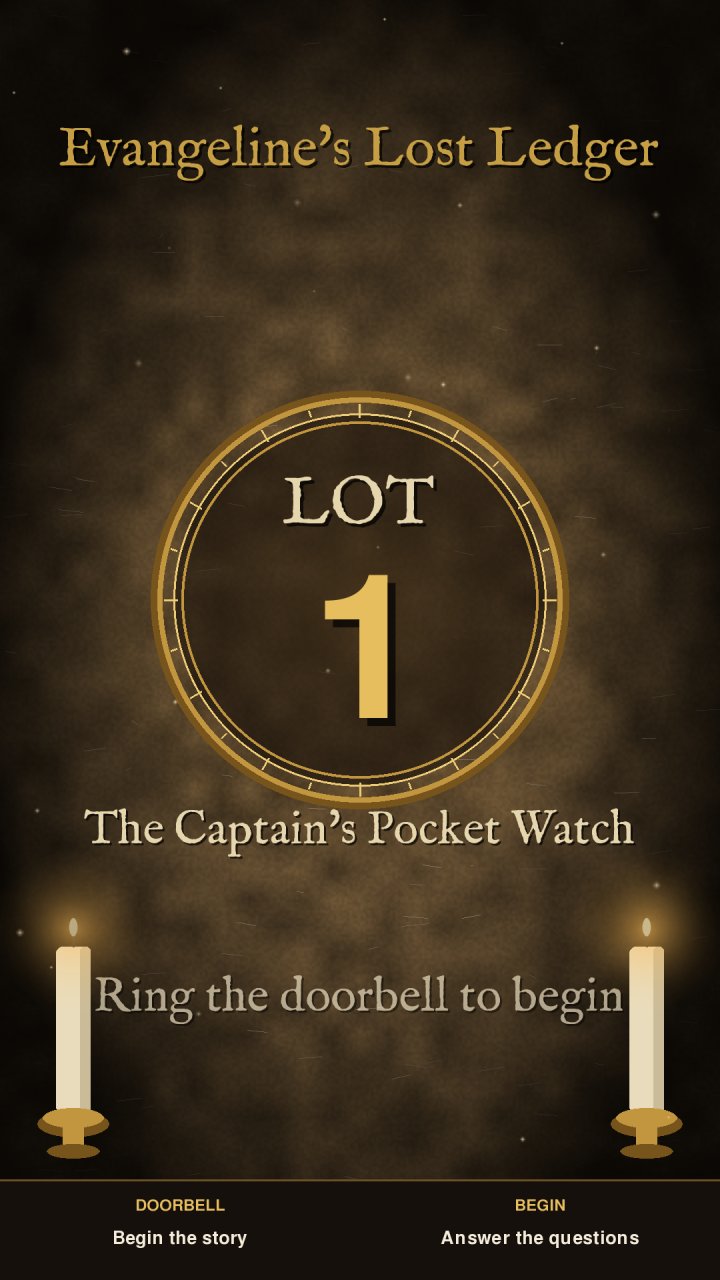
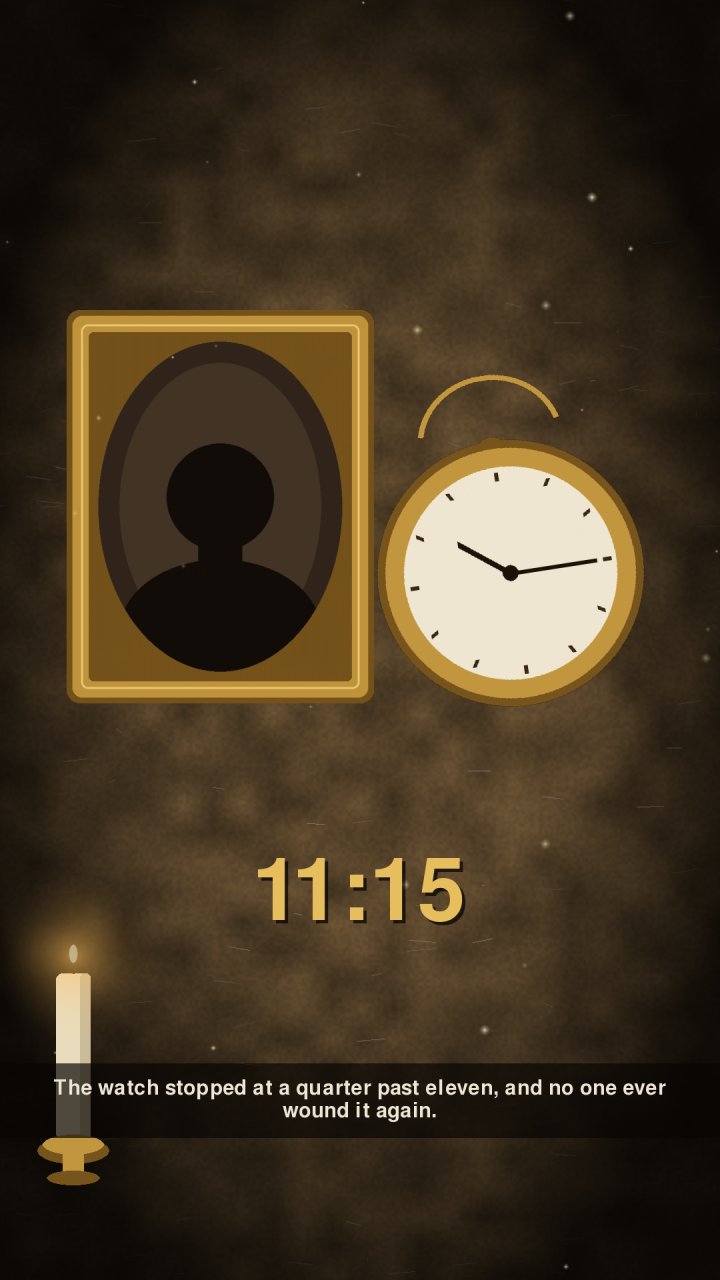
Unchanged from the easel we have today: the attract screen shows the lot, the doorbell starts the narrated story.
New: the story ends with a paddle code
Instead of sending players off with a list of clues, the last screen gives the lot's paddle code: the three colored buttons in a particular order. The easel shows the code on screen and says it aloud several times. Nothing is printed or handed out: the easel giving you the code is the point. Pressing each button exactly once gives exactly six orders, one for each of the six stories, so every auction stand is identical and can play any lot. Any stand can be used, and the stands will be clearly marked as auction stands so players know where to go.
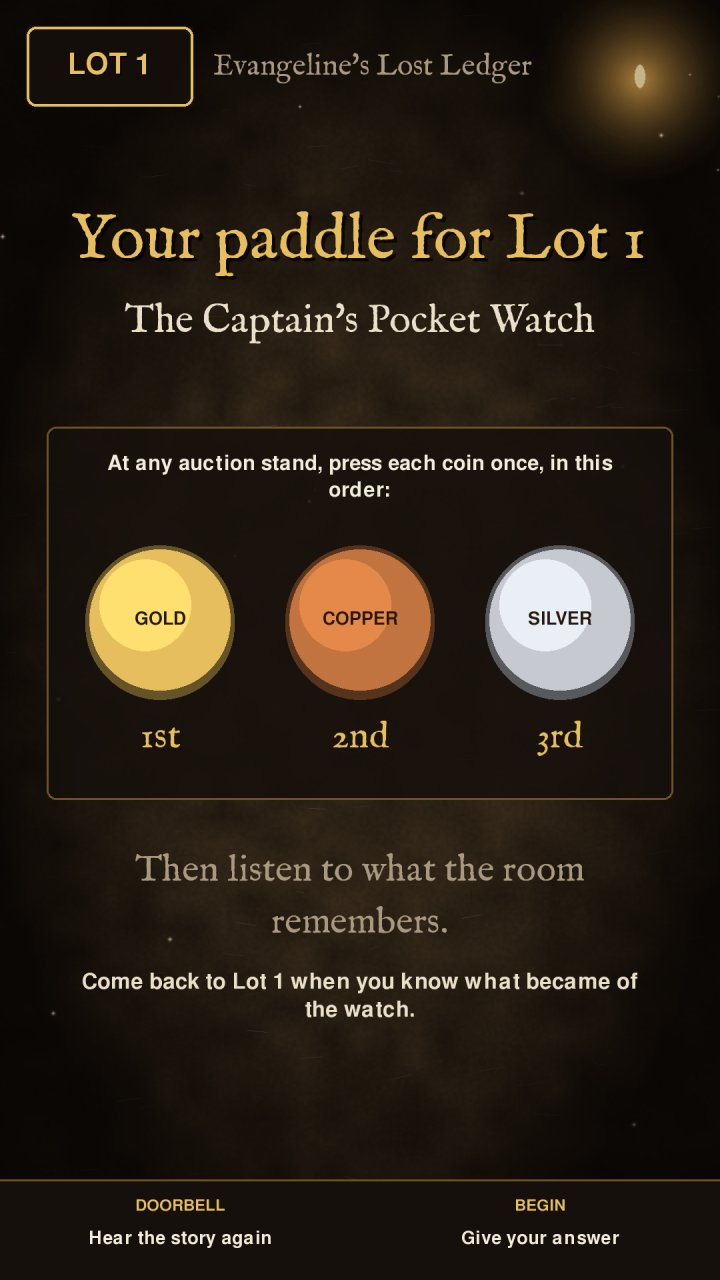
Six button orders, one per story. The assignment shown is an example.
The auction stand: standby, then séance
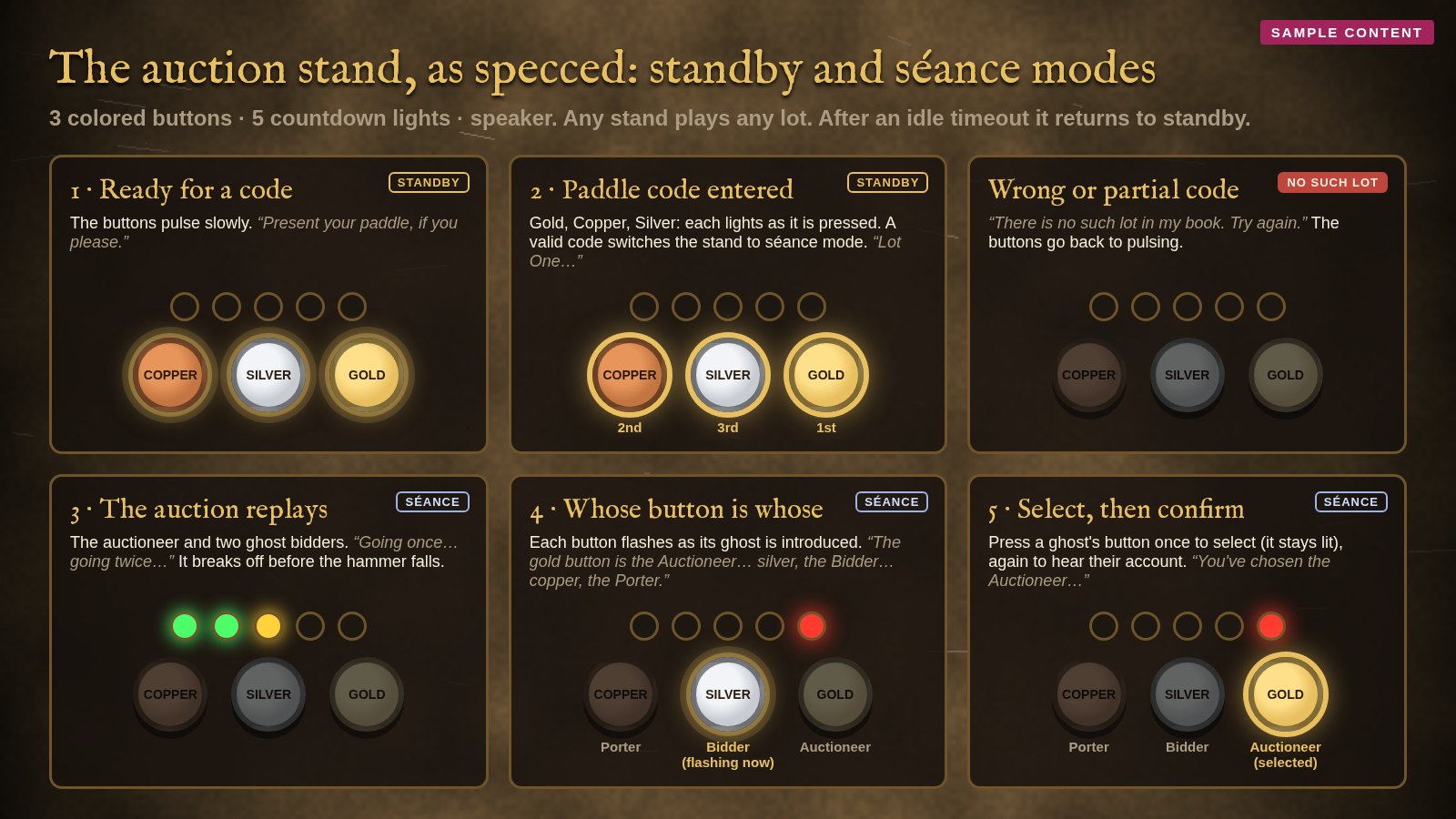
A stand waits in standby, ready for a code. The player presses their paddle code. A wrong or partial code gets "There is no such lot in my book. Try again." A valid code switches the stand to séance mode: it plays that lot's moment from the auction night as a short ghostly audio scene (the auctioneer, the two ghost bidders, the room) while the five lights count down green, green, yellow, yellow, red: "going once, going twice…" The scene breaks off before the hammer falls. Then the voice explains whose button is whose: each button flashes as its ghost is introduced ("the gold button is the Auctioneer…"). Press a ghost's button once to select them, again to hear their account. After an idle timeout the stand returns to standby for the next group.
Question the witnesses
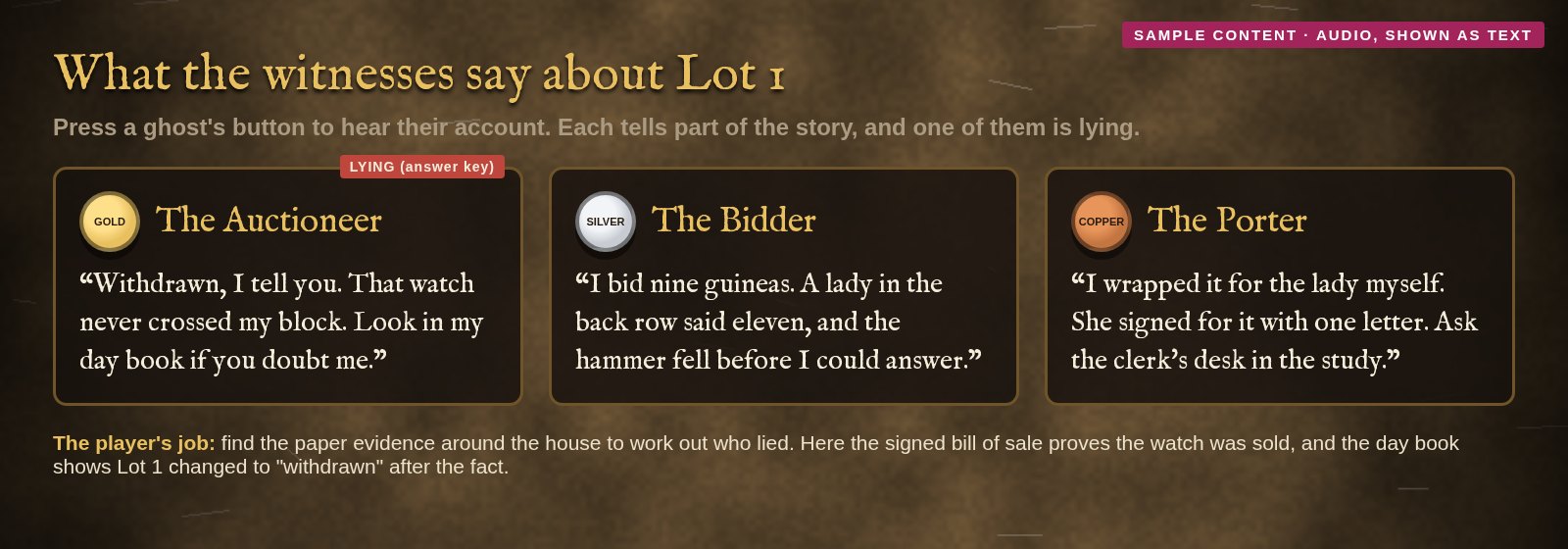
Each of the three buttons belongs to one ghost: the Auctioneer (gold), a Bidder (silver) and the Porter (copper). Press a ghost's button to hear their account. Each tells part of what happened, and one of them is lying. The stand finishes by naming the lot's ledger number, so the player knows which physical ledger to find. Audio only is a strength here: it's a séance, and the player is eavesdropping on the dead.
Paper clues and the ledger settle it
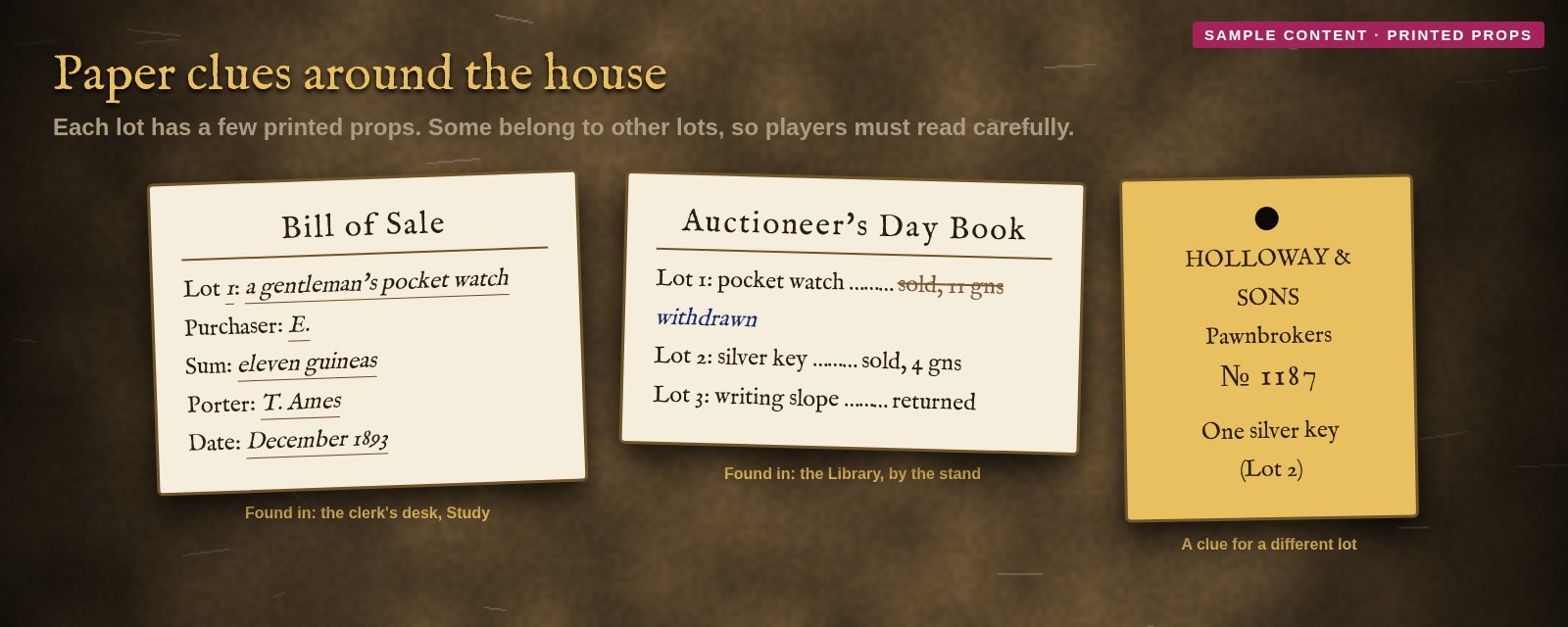
The witnesses point to places in the house. Printed props hidden around the venue (a bill of sale, the auctioneer's day book, a pawn ticket, a telegram) and the lot's physical ledger show who lied. Some props belong to other lots, so players read carefully. This brings back the paper clues from the earlier version and spreads groups across the venue.
Back to the easel: name the fate, close the case
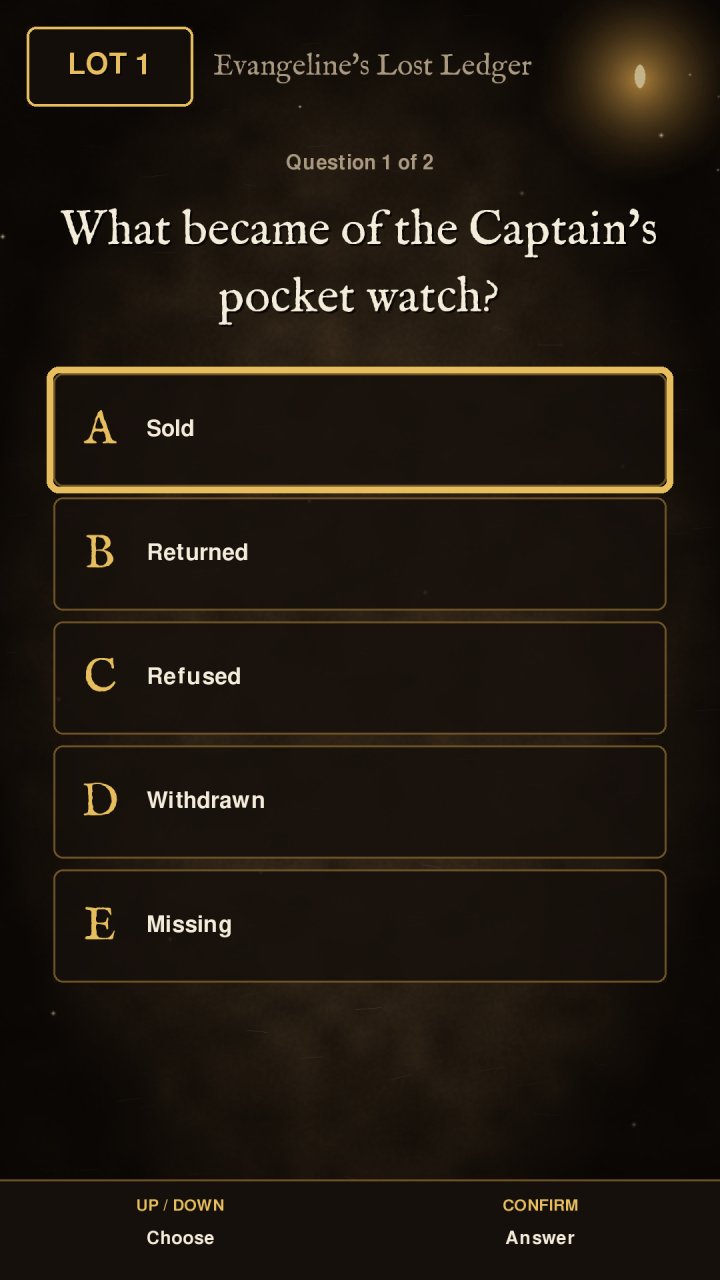
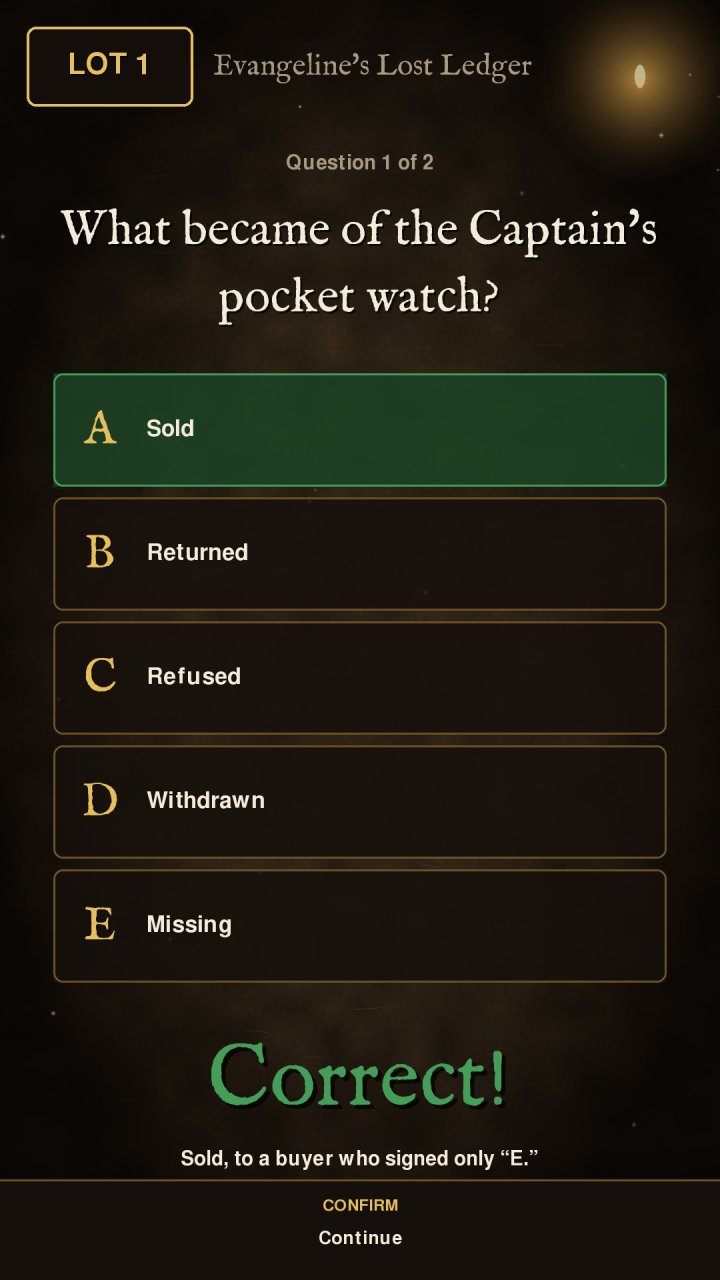
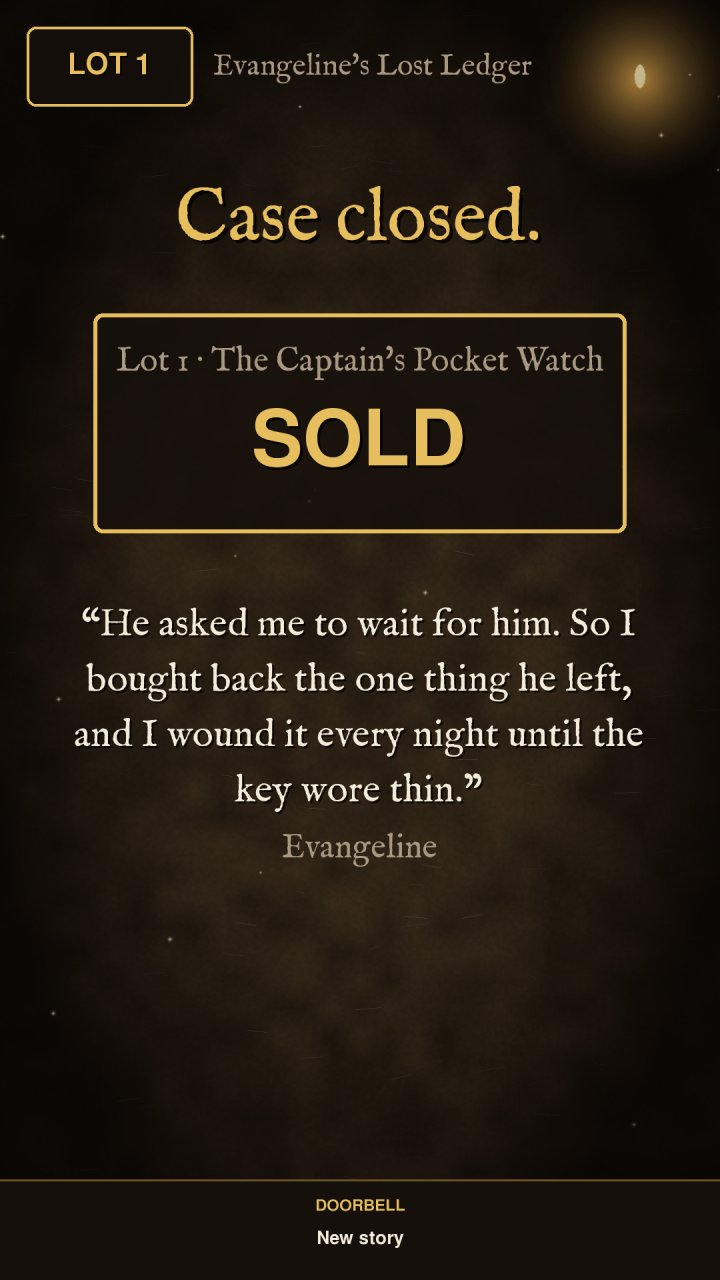
The player returns to the same easel and presses BEGIN to start the interactive questionnaire, on the easel's existing question screen (UP/DOWN to choose, CONFIRM to answer). Many of the questions use information they can only get by listening at the auction stand; that is the point of the stand. The questionnaire ends with what became of the lot (the five fates), then the case-slip mystery.
After a wrong answer the easel gives a hint that tells them what they need to go and get: for example "Ask the Porter where the watch went" or "Find the bill of sale in the Study". They can go, come back and try again: never a dead end. Staff are also walking the room to help anyone who is stuck.
A lighter option, if you want the bidding kept
At the key moment the scene pauses: "Do I hear more for Lot One?" The player answers with a button, and that choice decides which witness speaks first, or which part of the story they hear next. The bidding steers the investigation, but the player can't lose and there's no balance to track.
What stays from your design
Kept
- Case slip, portrait hunt, easel, auction, back to the easel, in the same order
- Copper / Silver / Gold, now the colors of the stand's three buttons
- Five countdown lights: green, green, yellow, yellow, red
- The auctioneer and two ghost bidders
- Eight physical ledgers, one per lot
- Never a dead end
- Every playthrough ends with a closed story
Changed
- There are no coins or credit. The stand has three colored buttons: they take the paddle code, then each belongs to one ghost.
- The auction replays the night the lot's fate was decided, instead of being a bidding contest.
- Each easel is one lot, explored in depth, instead of three lots per player and deducing which one matters.
- Recovery questions are replaced by the questionnaire's hints (what to go and find), plus staff in the room.
- Printed paper clues return, placed around the venue.
Hardware: nothing new
| Station | What it needs |
|---|---|
| Easel | The Raspberry Pi easel as it is today: portrait screen, speaker, doorbell, BEGIN, UP, DOWN, CONFIRM. New content only: the paddle-code screen and the fate question. |
| Auction stand | The painted stands, as specced: 3 colored buttons (gold, silver, copper), 5 lights, speaker. Every stand is the same and holds every lot's audio. |
| Clues | Printed props plus the 8 physical ledgers. No electronics. |
Every station runs on its own. Nothing needs the venue Wi-Fi, nothing is written to a tag, and no station has to remember a player. The code the player carries in their head is the only link between stations.
Questions for you
- Are the five fates still Sold / Returned / Refused / Withdrawn / Missing, and is it the same list for every lot?
- At the final easel, is it two answers (the fate, then the case-slip mystery) or one combined answer?
- Is choosing with UP/DOWN and CONFIRM on the easel (as it works today) fine for the fates, or do you want a button per fate?
- How many auction stands are built and painted?
- Can the paper clues be loose props that staff reset between groups, or do they need to be mounted or framed so nothing walks off?
- Roughly how long should one playthrough take, and how large is a typical group?
- Are the eight physical ledgers still being made as written books? Should they carry part of each lot's evidence?
- Do you prefer the full witness version or the lighter bidding-steers-the-story version?
- Six stands playing audio in one room will bleed into each other. How should we handle it: speaker placement and spacing, handsets players hold to their ear, headphones, or directional speakers? Where will the stands sit in the room?